The first half of the year 2025 is done, summer holidays are over, and it’s now time to focus on what’s coming during the second half of the year. The year 2025 marks also a two-decade milestone of my professional career, counted as getting paid for the work, and some reflection about how information technology field has transformed during that time.
Back in 2005 the internet was just beginning to land in our pockets and getting more interactive and dynamic. Mobile devices were connected with quite sluggish connections and having physical QWERTY-keyboards, which I miss from time to time – Yes, I was (still am) a proud fan of Nokia Communicator family phones, and sometimes even miss the feeling of a physical keyboard and boxy, heavy-weight feel on my iPhone. Terms like ‘cloud computing’ and ‘generative AI’ weren’t in the public discussion. Datacenters, server racks, and thin clients were more of a thing back then. My plan was to delve into telecommunications and software development, which I did for a very short time. I participated in projects studying short range wireless technologies like WiFi, Bluetooth and Zigbee, and started building application and services with various platforms like Java, .NET and C++. It’s great to see that these technologies still exist today, with improved connection speeds, reliability and security. But, my passion for technology guided me down unexpected paths. During these +20 years we have seen three profound technological transformations, which have changed how we build solutions, use services and, the most of all, how we work and need to adapt to changes.
Internet and online services to our pockets
When I started my career, I already had an opportunity to access my emails with a mobile device. So, I could read my messages on the fly and even reply to them – these were the first touches of the remote work era. Touchscreens were also coming to handhelds, but the technology wasn’t ready yet. Quite commonly you needed a stylus to “effectively” use it. Apple and iPhone changed the game around 2007 bringing more natural way to use touchscreen and removing the need of physical buttons. This started the race for bringing apps and services to support everyday life, and at the same time support working with mobile. Sadly, Nokia didn’t succeed in this competition, but maybe it was the time for new innovative leaders to shine. You can, of course, buy Nokia smart phone today, but it’s not actually the same company anymore.
I have had a privilege to try out numerous mobile device platforms like Nokia Series 40/60/90, early Ericsson’s touch screen phones, Windows Mobile and Phone, several Android starting from the early developer version of Android and iPhone. My very first mobile device was legendary Nokia 2110, which I still have, in the early GSM days with huge power battery, draggable antenna, no internet, the legendary belt-clip, and “Säkkijärven polkka” as the ringtone.
Another aspect of mobile-enabled work are networks. I started my career investigating 2G and 2.5G mobile networks, and have built a real testing environment for 2.5G (GPRS) connections using real-life GSM network base station. Compared to that the modern super-fast mobile networks have enabled real-time gaming, VoiP and video calls, music and video streaming, and most importantly enabled working almost anywhere. Nowadays I start my summer vacation working a couple of weeks from an off-the-grid summer cottage. In Finland, our mobile network coverage reaches even the most remote forest cabins with a decent connection – currently I have 5G with over 100Mbit/s – enough for running my Teams calls.
SharePoint – from file sharing to secure collaboration
Microsoft ecosystem and especially SharePoint have been following my professional IT career from the beginning.
I started using SharePoint for supporting project work and document sharing. The version was Windows SharePoint Services 2.0, shortly WSS 2.0, which was limited version of SharePoint Portal Server 2003. I had used traditional network drives, of course, who hasn’t? From the start I realized the advantages of SharePoint – team sites, libraries, metadata, versioning and simple co-authoring. I truly jumped into SharePoint as a developer/consultant on the dawn of SharePoint 2010, building first intranet and document management solutions with it. On that time a “SharePoint Developer” was a mysterious, desired creature, who where nowhere to be found. When I think about it later on, I was just a software developer building web applications on top of SharePoint commonly with Microsoft .NET Framework, HTML, CSS and JavaScript. But you also needed to have IT specialist knowledge, understanding servers, networks, databases and more. This time teached me a lot about software development, building enterprise-scale SharePoint farms and server environments, identity management, and, most of all, solving problems. Everyone remembers “stucking on starting…” and reading Spencer Harbar’s blog through the night, or browsing through logs to see why your master page failed to load after adding a user control to it.
My real jump to the cloud happened when Microsoft’s Business Productivity Online Suite was rebranded as Office 365 – nowadays known as Microsoft 365. It required that you needed to understand a lot more than just SharePoint, like identities, security, device management, service principals, DNS entries, information protection and so on. With Microsoft 365 and services like SharePoint, Microsoft Teams, and now Copilot, the rate of change is super-fast. New features, updates and changes are introduced in a very rapid phase. For me, as an engineer and techie, this has ment that I need to learn about people and how you can successfully drive the change. I’m still on that journey, learning everyday.
The Dawn of Agentic Work
Artifical intelligence has become the driver of the this already ongoing substantial change. Some say it’s bigger than he internet or some compare it to the invention of electricity. It feels like it’s improving daily getting better at things weren’t possible yesterday or last week. First time we have a change to talk with our computers and applications using our natural language rather than writing mysterious code or using predefined communications.
AI has already changed the way we work and is involved in our daily life. Some of us have already harnessed it naturally to support our work, for some it’s still lurking in the shadows, and for some it’s even scary. We also need a human touch, sensitivity and humility to really get benefits of this change for the better. AI tools like ChatGPT, Copilot or Gemini, are easily accessible for everyone, which democratizes access to not just developers and IT professional, but everyone with a browser and some curiosity, to start benefit from them.
Generative AI quickly became our personal assistant, like Copilot making notes and summaries of our meetings, helping build a presentation, or summarizing our emails from the past week. But we are already in the next phase: agentic work. AI-driven agents are redifining our organizations and teams. Imagine a team member whose calendar is always free and who remembers every detail of a specific topic, someone analyzing all incoming emails, just in seconds, and generating sales leads out of those,or scans our data and gives tips how to improve our customer retention or flag anomalies, or identify operational risks. These are tasks for AI agents.
Agentic work is not handing over everything to a machine, it’s a collaboration between humans and AI-driven agents. These agents excel at understanding and summarizing all kinds of data, and offering suggestions based on it. But we stay in control and making the final decisions, which are often based on more than just raw data or facts.
Agentic work is, above all, a change to our mindset for collaboration with AI. To use AI agents effectively, we need to understand not only their capabilities but also their constraints. As Microsoft stated in their recent Work Trend Index – everyone need to transform to an agent manager in the future. That means we must start learning how to design agents and delegating our tasks to them.
Leading the agentic work is a significant mindset shift. And it’s all about creating a culture, where experimentation and continuous learning are not just encouraged, but expected. It’s also means that it’s not just giving instruction, but rather building an environment for collaboration between people and AI and driving the change with a human touch. Leaders must be at the forefront of implementing agentic work and sharing examples for other to follow.
It’s great to see these agentic work ideas becoming a reality when working with customers and sharing ideas with colleagues. Copilot and Copilot agents are integrating to modern work tools we are using daily, which …
Career Milestones
Here are some highlights of my professional career, which have driven my to succeess and change.
Engaging with communities
Technology has always been my passion, but when people come together around it, the real magic happens. Over the years tech communities have given me opportunities to share my knowledge, meet fantastic people and build-lifelong friendships. It has given me confidence for writing and sharing my knowledge on digital and real-life stages, which I tought would never be real in early days of my career.
I’m currently one of the founders and organizers of Microsoft 365 Copilot Community in Finland, previously called Team Community Finland. Now running 7th year. Sharing my knowledge is one rewarding part of it, but even more seeing everyone share, discuss, debate and have fun – together.
I been also participating on organizing several digital community events like the famous TeamsNation and Metaverse One with like-minded community actives. And now we are cooking something new called The AI-Native Workplace Summit, which focuses on topics around artificial intelligence. The event takes place on September 24th, 2025, with free online participation. The purpose of these communities have always been providing the opportunity for everyone to join in, and keep them free and community-driven.
I’m not alone here. I want to present my deepest gratitude to Adam Deltinger, Chris Hoard, and Vesa Nopanen for bringing me in these communities and sparkling ideas with me.
Microsoft Most Valuable Professional Award
I was just re-awarded as a Microsoft MVP for the sixth time, focusing on my passion in modern work – Microsoft Copilot and Microsoft Teams. The MVP community have given me opportunities to meet and discuss with like-minded professionals and give feedback.
I need to thanks Vesku again for the push to get me started on this journey!
Authoring a SharePoint Book
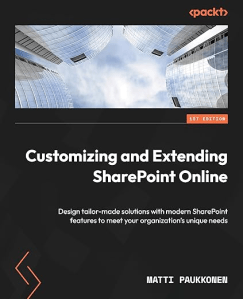
In late 2023, I was offered a proposal to write a technical book. Offered topic was SharePoint, and after a couple days of hard thinking, I accepted. Personally, I took it as a challenge. Could I do it? How much effort does it take? Knowledge-wise, I had worked with SharePoint over 15 years on that point, so it wasn’t the actual concern.
This was a great learning project for me. Learning technical writing in English, structuring thoughts to clear paragraphs and sentences, wording and self-discipline.
You can find the book here:
Partner Invitation to Tahto Group
In fall 2024, I had the privilege to being invited to become a partner at Tahto Group. It’s a new adventure for me to share my knowledge and ideas for greater good, but also learning opportunity how to build future-proof strategies, culture and work-life.
Why did I take this step? I have been working in the company for couple of years the decision felt natural. From my very first meeting with Lasse Miettinen, I felt genuine sence of warmth and welcome. Within minutes, it was clear that we share same core values – both in work and in life. Those same values are in the core of our culture and values at Tahto.
Thanks for Tahto’s founders Lasse, Sanni-Kaisa and Jere, and Tahto’s other partners for giving me the opportunity to grow.
Lessons Learned
Over these two decades, I have been privileged to work with such great minds who have been sharing their knowledge, ideas and pushed me forward, and built life-long friendships. I hope I have given at least something back. Here couple of my advises and lesson learned on the way.
Be Curious
I have always been curious about new technology and opportunities, and what’s coming next. It has forced me to continuously learn new things, try and fail, and challenge myself.
Work together
The best part is always the people. Working with amazing teams, exchanging ideas, debating, and giving and receiving feedback. It’s more convinient to solve a problem with a team rather than sitting on a dark room early in the morning banging your head to a wall.
Sharing is Caring
Share your knowledge, and you might get back new ideas and fresh perspectives.
Be kind
In this fast-moving world we need a human touch and letting people be themselves. Sometimes just listening or asking “How are you doing?” is enough to make a difference.
Closing Thoughts
This isn’t just looking back, it’s a foundation to build on. The future of work is already here, and we’re are shaping as we go. I’m still excited about technology, but even more inspired by the opportunities it’s bringing us.
Discover more from Enabling the Future of Work with Matti
Subscribe to get the latest posts sent to your email.
 Enabling the Future of Work with Matti